



Are North Carolina foundry workers entitled to workers’ comp benefits?
Yes, most foundry workers in North Carolina are covered by workers’ compensation if they suffer a work-related injury or illness. North Carolina law requires most businesses with 3 or more employees to provide workers’ comp insurance, meaning most foundry workers are eligible for workers’ comp benefits (including medical treatment and lost wages) if they get hurt on the job, as long as they’re an employee (not an independent contractor).
Workers’ comp is a no-fault system, so you don’t have to prove your employer was negligent—you just need to show that your injury, illness, or disease is directly related to your job. However, proving this can be more straightforward for sudden injuries—like burns from molten metal or a crushed hand from heavy machinery—than for occupational diseases or repetitive stress injuries that develop over time.
Respiratory diseases from silica dust or metal fumes, hearing loss from constant exposure to loud machinery, or chronic joint pain from years of lifting and repetitive motion may not show symptoms immediately.
Because some work-related conditions take months or even years to develop, employers and insurance companies may try to avoid paying workers’ claims by arguing that the conditions were caused by something outside of work rather than job-related exposure.
If you’ve been hurt or developed a serious illness due to your foundry job and your workers’ comp claim is denied, you have the right to appeal. Schedule a consultation with a North Carolina workers’ compensation attorney near you who can help you file an appeal and get the benefits you deserve.
What steps do I need to take to file a workers’ comp claim after a foundry accident in North Carolina?
If you’ve been hurt on the job or developed a work-related illness or disease from foundry work, filing a workers’ compensation claim is the first step toward getting the medical care and benefits you need.
Here’s what you need to do:
- Get medical attention. See a doctor right away so your injury or illness is documented, which is crucial for your claim. Be sure to tell the doctor your condition is work-related so it’s recorded properly.
- Notify your employer in writing. You must inform your employer within 30 days of your injury or diagnosis of your disease. A verbal report isn’t enough—put it in writing and keep a copy for yourself.
- Submit Form 18. This is the official claim form for the North Carolina Industrial Commission (NCIC). It’s best to file it as soon as possible, but you have up to 2 years from the date of your injury or illness to do so.
- Wait for the insurance company’s response. The insurance company should send you a written decision within 14 days, letting you know if they accept or deny your claim.
If your claim is delayed, denied, or undervalued, a workers’ comp attorney can help you fight back and get the benefits you deserve. Insurance companies don’t always play fair, so having a skilled attorney on your side can make all the difference.
What are foundry health hazards?
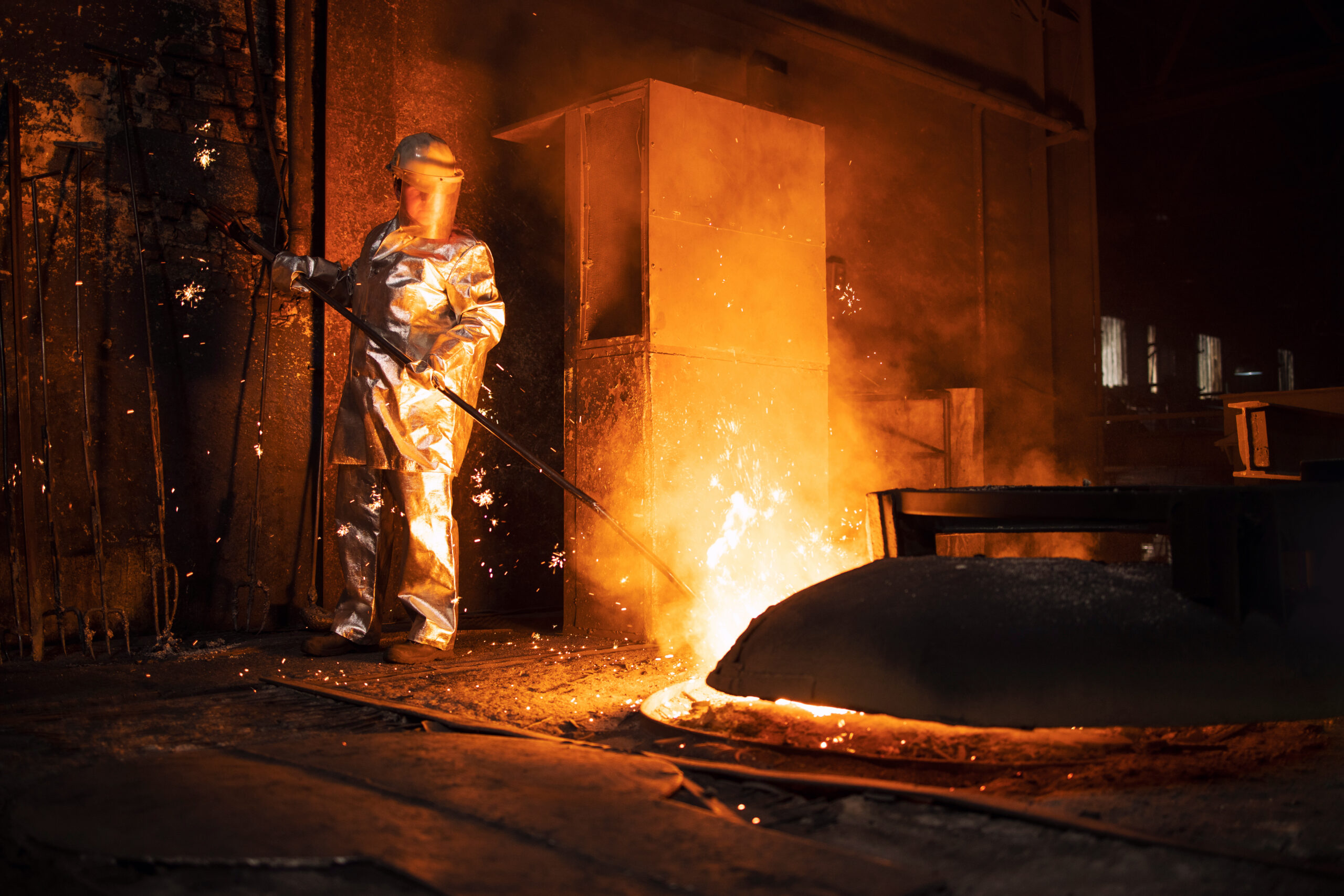
Working in a foundry isn’t for the faint of heart. It’s tough, demanding work in an environment full of heat, heavy equipment, and hazardous materials that pose serious risks and often take a toll on your body over time.
One of the biggest dangers is extreme heat. Foundries run at blistering temperatures, with molten metal reaching over 2,000°F. That kind of heat isn’t just uncomfortable—it can lead to heat exhaustion, dehydration, and even heat stroke, which can be life-threatening. Burns are another major risk, whether from splashes of molten metal, hot surfaces, or steam. Even with protective gear, accidents can happen in seconds.
Other common risks include:
- Air quality—or lack of it. Foundry workers are exposed to fumes, dust, and chemicals that can cause breathing problems and long-term lung damage. Tiny metal particles, silica dust, and toxic gases from molten metals can settle deep in your lungs, increasing the risk of lung diseases and other serious respiratory issues.
- Heavy machinery and moving parts are another big concern. From shakeout machines to forklifts and massive molds, foundry workers are constantly around dangerous equipment. A moment of distraction or a mechanical failure can lead to catastrophic injuries like crushing injuries, head injuries, amputations, or even internal organ damage.
- Repetitive motion is another problem that sneaks up over time. Constant lifting, hammering, grinding, or pouring can wear down joints and muscles, leading to chronic pain and long-term repetitive stress injuries like tendonitis that don’t go away easily.
- Slips and falls are also common in foundries, especially with greasy floors, loose materials, and the general chaos of a busy shop. These accidents can result in chronic back problems and even permanent spinal cord paralysis.
- Noise from loud machinery and metal-on-metal sounds can lead to hearing loss over time, even with ear protection.
While safety gear and precautions help, accidents and health problems in foundries still happen. If you’ve been hurt or developed a serious illness because of your job, it’s important to know your rights and options—because your health should never be the price you pay for making a living.
What respiratory diseases are associated with foundry operations?
Over time, breathing in these harmful particles can cause long-term damage to the lungs, leading to chronic illnesses that make it difficult to work—or even breathe—normally.
Below are some of the most common respiratory diseases foundry workers face:
- Silicosis: One of the biggest threats in a foundry is silica dust, which comes from working with sand molds, grinding, and cutting metal. When tiny silica particles are inhaled, they scar the lungs, causing permanent breathing problems. Silicosis can develop over years of exposure, but in some cases, it can happen much faster if dust levels are extremely high. Symptoms include chronic cough, shortness of breath (that progressively gets worse with time), and chest pain.
- Occupational asthma: Foundry workers are often exposed to chemical fumes, dust, and airborne irritants that can trigger occupational asthma or make pre-existing asthma worse. Symptoms include wheezing, tightness in the chest, coughing, and difficulty breathing, which may go away if the worker is no longer exposed to the irritant. Some workers also develop severe allergic reactions to certain chemicals used in the casting process that require immediate medical attention.
- Chronic obstructive pulmonary disease (COPD): COPD is a progressive lung disease that includes chronic bronchitis and emphysema. Exposure to metal fumes, foundry dust, and smoke over time can irritate and damage the airways, leading to wheezing, persistent cough, and shortness of breath. COPD can make everyday tasks difficult and worsen over time, especially if exposure continues.
- Metal fume fever: When foundry workers breathe in metal fumes (such as zinc, copper, or magnesium) from welding, melting, or casting, they can develop flu-like symptoms known as metal fume fever. Symptoms include fever, chills, muscle aches, chest pain, a metallic taste, and difficulty breathing, usually appearing a few hours after exposure. While symptoms often go away within 24-48 hours, repeated exposure can lead to more serious lung conditions over time.
- Lung cancer: Long-term exposure to toxic chemicals, silica dust, and metal fumes in foundries has been linked to an increased risk of lung cancer. Substances like asbestos, chromium, and cadmium can cause cell damage and mutations in the lungs, leading to cancerous growths.
Injured in a foundry accident in North Carolina? We can help get the benefits you deserve!
If you or a loved one has been seriously injured or developed long-term health complications from foundry work in North Carolina, you deserve to be fairly compensated. The skilled work injury attorneys at Wilder Pantazis Law Group have more than 85 years of combined experience helping injured workers get maximum compensation after on-the-job injuries or diseases.
Contact Wilder Pantazis Law Group today to learn how we can help with your workers’ comp claim.
Contact Us